

“I got a call from Mahershala Ali, a very, very respectful phone call, from him personally. He called me and my Uncle Maurice in which he apologized profusely if there had been any offense,” Edwin told Shadow and Act. “What he said was, ‘If I have offended you, I am so, so terribly sorry. I did the best I could with the material I had. I was not aware that there were close relatives with whom I could have consulted to add some nuance to the character.’” –
– From Mahershala Ali Apologized to His Green Book Character’s Family After Controversy by Hunter Harris
Mahershala Ali has apologized to the family of Don Shirley the musician he portrays in the new film Green Book. Shirley’s family, who were apparently left as unknown to the filmmakers/actors, as was the reality of the man’s life, have said the film falsely depicts their relative by misrepresenting his pride in and awareness of self, his (lack of) friendship with Tony “Lip” Vallelonga played by Viggo Mortensen, and disrespects his stated request while alive that no such film be made. However, to an industry so essential to the management and reflection of public opinion such concerns are of necessity routinely ignored.
The Vernon Philosophy of Black Media Avoidance (VPBMA) is a semi-ironic homage to an old friend, as well as, an argument for a much needed political clarity around – and aggressive hostility toward – popular culture and mass media. Simply, many years ago a Black friend and co-worker, Vernon, said he would no longer go to any films which included Black actors. Initially, I thought this absurd, or at least an over-corrective response to a clear, long-standing and well-documented problem of Black media portrayal. I only needed a few decades and the accumulation of massive student-loan debt to realize just how correct Vernon was/is.
For more substantive argument and documentation I welcome those interested to peruse my own lectures and presentations on the subject and our tremendous catalog of broadcasts, interviews and essays on the history and function of mass media in the U.S. For now, however, suffice it so say that, given the ideological and political function media play (none more significantly than here in the United States today) the VPBMA argues that Black people, any oppressed group, must refuse acceptance of any and all pop cultural or symbolically “positive” depictions. Said differently, the VPBMA calls for an – immaterial and intellectual – boycott of commercial pop cultural product, a refusal to recognize them as containing any even seemingly redeemable value. The VPBMA argues that such media product only exist to further confuse, weaken or diminish the capacity for critical, radical and countervailing thought.
The “boycott” is immaterial because the VPBMA is not a particular political call-to-action and is specific only to the arena of dominant idea formation, public opinion and analysis. The purpose is to overtly and aggressively challenge the tendency among us all to desire recognition from power or to see ourselves positively reflected by power and to focus more on assuming power – the only position from which to control the popular dissemination of media, symbol and image.
Morgan Freeman Demonstrates the Role or Function of Black (All) Celebrity
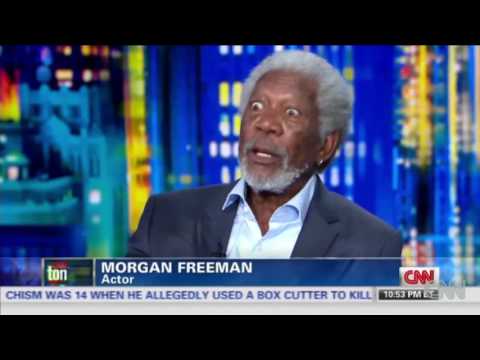
A few morsels from the story of Ali’s apology are worthy of quick note and do help explain the VPBMA. Note first that Ali tells how he is limited by the material with which he is given to work and that he didn’t even know Shirley has remaining family with whom he could have consulted. This speaks to the powerlessness of those we see on screen – who are always the least powerful people in the process of media production – and to the irrelevance reality holds to stories industry needs to tell. The tradition of the “Magic Negro,” the Black character whose only purpose is the transcendence of a White one or White people or Whiteness. Think of almost all of Morgan Freeman‘s career. Which also speaks to that political purpose – Freeman’s entire career and popularity was developed and maintained specifically so that his cinematic function could be brought forward, when necessary, to mainstream television for the above full-on condemnation of all Black people and poverty.
In life Shirley “flatly refused” to have his real story turned into that of another “Magic Negro” performance and denied the claim of any closeness to Vallelonga. But once dead and with his family kept far from the production Shirley can be resurrected as he was not. To serve what purpose? Is it perhaps another attempt to mollify a new generation of increasingly (and justifiably) angry Black people? We did just see the founders of Black Lives Matter “denounce” The Hate U Give as performing a similar movement-denying/diminishing function. Or is it just another cyclical attempt at redefining race-relations as being a matter of interpersonal experiences and not the result (at least in large part) of mass dissemination of structurally dependent myths?
It should also be noted that it wasn’t that long ago that actor Viggo Mortensen was being presented to us by an adoring White Left press as a forward-thinking “peace activist.” Once more the value of the VPBMA is demonstrated in its insistence that we reject overtures from commercial product which reduce the likelihood of confusion over seeing nominally progressive people performing horrific pop cultural functions. Whether this is part of the traditional struggle between Black radicals and the White Left or simply the reality that the politics of the performer are irrelevant – or both and more – it remains that when bent to commercial form the pre-existing individual disappears. Only their function remains.

Like it or not, once seen participating in pop cultural commercial product, propaganda or marketing, any individual actor, performer – or the idea, people or history depicted – immediately lose (all?) value to positively representing critical or radical politics. Think Mos Def, Common and Talib Kweli all of whom have done Coke, Toyota and GE commercials. Nothing they rhyme, say or do after can balance the interpretive damage this does to those trying to assess them as radical figures. Beyoncé cannot represent both Pepsi and the Panthers. For many she simply becomes the acceptable contemporary interpretation of what “radical” and “Black Panther” mean. Worse, of course, is that Ryan Coogler film which we’ve spent a good amount of time on already. The VPBMA is not a critique of individual performance or choice, this is not a critique of artists or media-makers. The VPBMA is an attempt to reorient audiences to the context of our media environment and the function of pop cultural media product.
More difficult is the VPBMA challenge to reject psychic overtures from commercial industrial product which claim to be uplifting history for the people (BTW, the only “For The People” we officially recognize here at iMWiL! is that from the legendary Listervelt Middleton). This is why I have historically rejected films like Selma and Fruitvale Station. And it is why I have stood already against rumors of films about Assata Shakur and Fred Hampton. We gain nothing from pop cultural depictions of radical histories but distorted versions which work more to recreate them as immaturities or imperfections to overcome or, worse, as somehow accepting of the world as we know it as inevitable or as an improvement. Films, perhaps more than any other medium, also confer a stronger sense of understanding onto the audience meaning that more people who leave feel they now have clarity around a given topic and need not follow up for more study – contrary to popular myth. Remember the positive impact Spike Lee’s 1992 Malcolm X was meant to have? That historical mess paved the way for its “academic” equivalent, one that continues to demand our response.
But the greatest challenge of the VPBMA is it’s insistence that we forgo fame for substance and find, create and disseminate alternative forms of art and entertainment that does the political and cultural work we so desperately look for from institutional power and producers of media or ideological product. The VPBMA is a base call for an immaterial break from dominant culture that if cannot rise to the level of material boycott can at least produce a baseline standard of intellectual rejection, refusal and resistance to the empty and distorted forms of ourselves, our politics and our histories we will continue to suffer.


Leave a Reply